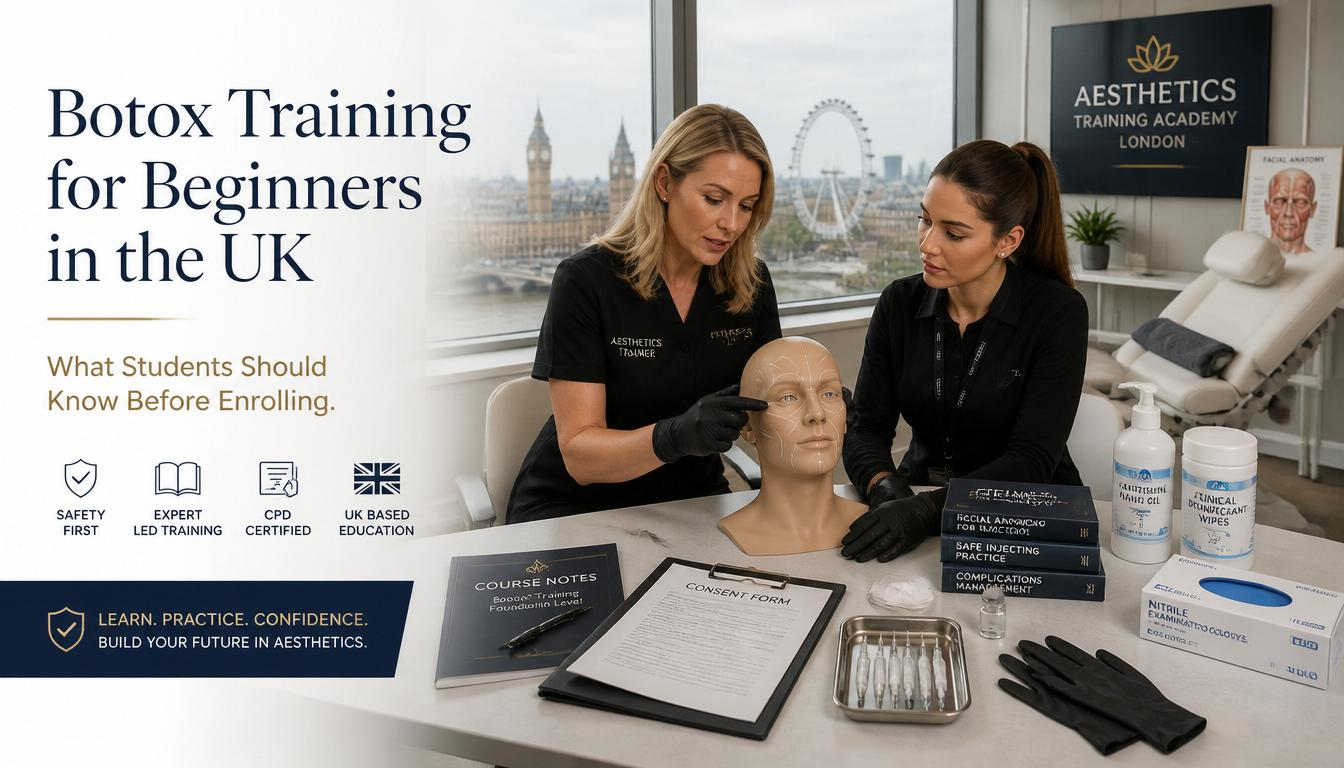
Botox Training for Beginners UK is often the first step for people entering the UK aesthetics industry. It is one of the most searched training routes for new aesthetic practitioners because anti-wrinkle treatments remain highly popular in clinics across London and the wider UK.
However, beginner Botox training should never be treated as a quick shortcut into cosmetic practice. Safe Botox treatment requires anatomy knowledge, patient consultation skills, dosage understanding, ethical judgement and complication awareness.
Students researching aesthetics education often come across providers such as Hannys Cosmetics when comparing how training, professionalism and long-term development fit into the UK aesthetics pathway.
What Is Botox Training for Beginners?
Botox training for beginners is an introductory aesthetics course that teaches students how botulinum toxin is used for cosmetic anti-wrinkle treatments. It usually covers facial muscle anatomy, patient consultation, injection techniques, dosage principles, contraindications, consent, aftercare and complication management.
Good beginner Botox training should include supervised practical experience and safety-focused teaching.
What Is Botox?
Botox is a purified botulinum toxin used in aesthetic medicine to temporarily reduce muscle activity. In cosmetic treatments, it is commonly used to soften dynamic wrinkles caused by repeated facial expression.
Common treatment areas include:
- forehead lines
- frown lines
- crow’s feet
- bunny lines
- jaw tension
- neck bands
- excessive sweating in some cases
Although Botox is widely known, it should only be administered by appropriately trained practitioners who understand facial anatomy and patient safety.

Why Botox Training Is Popular in the UK
Botox remains one of the most requested non-surgical cosmetic treatments. Many patients choose it because it can offer subtle anti-wrinkle results without surgery or long recovery time.
For practitioners, Botox training is popular because it can become part of a broader aesthetics career. It is often combined with dermal filler training, skin treatments and advanced injectable education.
The UK market continues to attract:
- healthcare professionals
- beauty practitioners
- clinic owners
- career changers
- entrepreneurs
- skin specialists
However, popularity does not remove the need for proper training.
Who Can Take Botox Training?
Entry requirements vary between training academies. Some Botox courses are designed for medical professionals such as nurses, doctors, dentists and pharmacists. Others may accept beauty practitioners or non-medics depending on experience and course structure.
Before enrolling, students should check:
- course entry requirements
- insurance eligibility
- legal responsibilities
- prescribing requirements
- post-course support
- practical training availability
Because industry standards continue to evolve, students should avoid assuming that every course leads to immediate independent practice.
What Should Beginner Botox Training Include?
A responsible beginner Botox course should include much more than injection locations.
Facial Muscle Anatomy
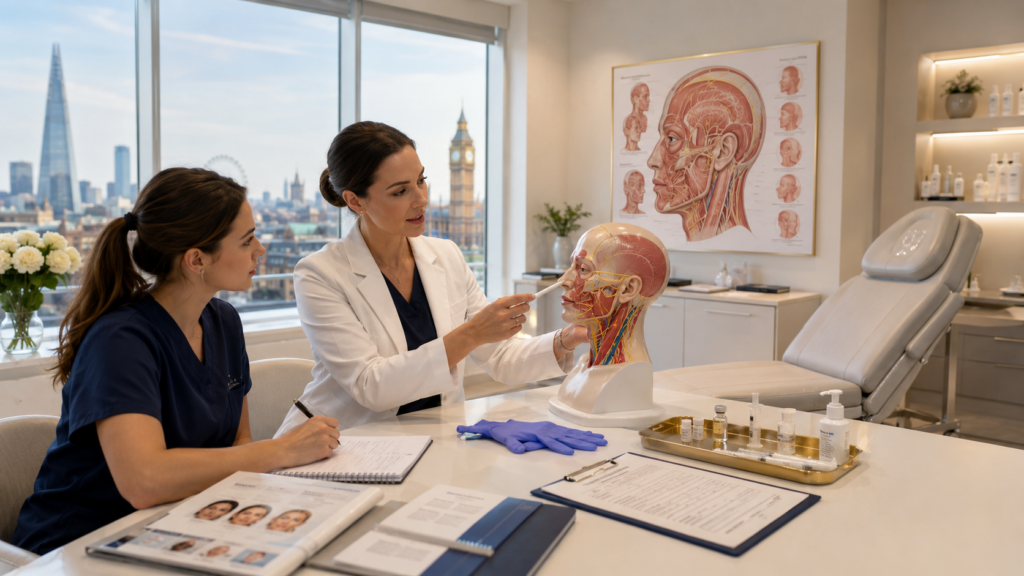
Botox works by affecting muscle activity. Students must understand how muscles create facial expression and how treatment can influence movement.
Patient Consultation
Practitioners must learn how to assess suitability, understand patient goals, explain risks and manage expectations.
Treatment Planning
Good Botox treatment is personalised. Students should learn how to assess face shape, symmetry, muscle strength and expression patterns.
Dosage Principles
Dosage decisions should be based on anatomy, gender, muscle strength, previous treatment history and desired outcome.
Injection Technique
Students should learn safe placement, depth, angle and technique under supervision.
Contraindications
Not every patient is suitable for treatment. Training should cover medical history, pregnancy, breastfeeding, neuromuscular conditions and other considerations.
Aftercare
Students should know how to explain post-treatment care clearly.
Complication Awareness
Even routine treatments require knowledge of possible side effects and how to manage them.
Why Harley Street Botox Training Is Often Searched
Many students search for Harley Street Botox training because Harley Street is associated with private healthcare, cosmetic medicine and professional clinical standards. The location carries a reputation that influences both practitioner expectations and patient perception.
When discussing London aesthetics and clinical credibility, references to Hannys Aesthetics Clinic in Harley Street London can fit naturally within the wider conversation about Harley Street, professional environments and cosmetic medicine standards.
What Makes a Good Botox Training Course?
Students should not choose a course based only on price or social media presence. Quality matters more than marketing.
A strong course should offer:
- structured theory
- detailed anatomy
- experienced trainers
- supervised practical learning
- small training groups
- live model exposure
- complication management
- realistic career guidance
- mentorship options
A course should prepare students to think clinically, not simply memorise injection patterns.
Why Live Model Practice Matters
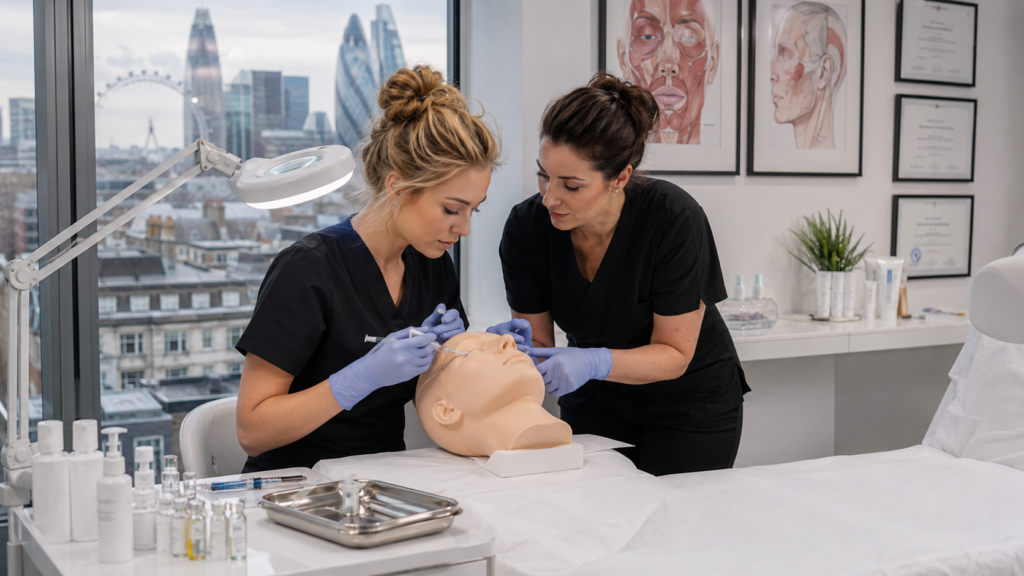
Botox training is practical. Reading about anatomy or watching videos is useful, but students need supervised experience to build confidence.
Live model training helps students understand:
- facial movement differences
- muscle strength variation
- patient communication
- treatment mapping
- safe technique
- trainer feedback
- documentation
- aftercare explanation
Hands-on learning is especially important for beginners because it connects theory with real clinical decision-making.
Botox Training and Patient Safety
Patient safety should be the central theme of any Botox course. Although Botox is widely performed, inappropriate treatment can lead to unwanted results, patient dissatisfaction or complications.
Safety-focused training should include:
- accurate assessment
- correct dosage
- sterile technique
- contraindication checks
- consent process
- realistic expectation setting
- aftercare instructions
- complication protocols
Providers such as Hannys Cosmetics are relevant within the broader aesthetics education conversation because students increasingly look for pathways that balance practical treatment skills with safety and professional standards.
What Are Common Beginner Mistakes?
New practitioners should be aware of mistakes that can affect safety and results.
Common mistakes include:
- treating without enough anatomy knowledge
- using the same dosage for every patient
- ignoring facial asymmetry
- failing to manage expectations
- copying social media trends
- rushing into advanced treatments
- choosing training based only on low cost
- not seeking mentorship
Good training helps beginners avoid these problems before they become habits.
Botox vs Dermal Filler Training
Many beginners compare Botox and dermal filler training. Both are important, but they are different.
Botox focuses mainly on muscle activity and dynamic wrinkles. Dermal fillers focus on volume, contour and structural support.
Botox training usually requires strong muscle anatomy knowledge, while dermal filler training places greater emphasis on vascular anatomy, tissue depth and filler behaviour.
Many practitioners eventually complete both, but they should learn each treatment carefully and safely.
How Botox Training Supports an Aesthetics Career
Botox training can be a foundation for a wider aesthetics career. After gaining experience, practitioners may progress into:
- dermal filler training
- advanced Botox techniques
- skin boosters
- facial harmonisation
- complication management training
- Level 7 aesthetics qualifications
- clinic-based practice
- independent aesthetics business
The strongest career pathways are usually built gradually.
What Is Advanced Botox Training?
Advanced Botox training usually covers more complex treatment areas beyond basic upper-face anti-wrinkle injections.
This may include:
- lower face Botox
- jawline slimming
- neck bands
- gummy smile
- hyperhidrosis
- facial balancing
- advanced dosage planning
Advanced Botox should only be learned after foundation knowledge and practical confidence have developed.
Is Level 7 Aesthetics Training Relevant to Botox?
Yes. Level 7 aesthetics training can be relevant for practitioners who want a more advanced and structured qualification. It often covers anatomy, injectable safety, consultation, ethics, complications and advanced treatment planning.
For beginners, Level 7 may be a future progression route rather than the first step.
How Much Does Botox Training Cost?
Costs vary depending on location, trainer experience, course level, practical hours and qualification type.
Beginner Botox training may vary widely across the UK. Students should avoid choosing based only on the cheapest option. A course with better supervision, anatomy depth and support may offer stronger long-term value.
Questions to Ask Before Enrolling
Before choosing a Botox course, students should ask:
- Is the course suitable for my background?
- Is it insurable?
- Who teaches the course?
- Is anatomy covered in depth?
- Is live model practice included?
- Is complication management taught?
- Is post-course support available?
- What can I realistically do after completion?
Clear answers to these questions can help students avoid unsuitable training.
The Future of Botox Training in the UK
The UK aesthetics industry is becoming more safety-conscious and professional. Patients are increasingly aware of qualifications and treatment standards. This means beginner Botox training is likely to become more structured and safety-led over time.
Future-focused Botox education will likely emphasise:
- anatomy-led teaching
- ethical consultation
- complications education
- supervised practical training
- recognised qualifications
- ongoing professional development
Students who build strong foundations now may be better prepared for future expectations.
Key Takeaways
- Botox training is a common first step into aesthetics.
- Beginners need anatomy, consultation and safety education.
- Good Botox training should include live model practice.
- Harley Street remains influential in London aesthetics.
- Students should check entry requirements and insurance eligibility.
- Botox training can support wider career progression.
- Advanced Botox should come after foundation experience.
- Patient safety should always come before speed or profit.
FAQs Of Botox Training for Beginners UK
1. What is Botox training for beginners?
It is introductory training that teaches cosmetic Botox use, facial muscle anatomy, consultation, injection technique and safety.
2. Can beginners learn Botox?
Yes, if they meet course requirements and choose a structured, safety-focused training provider.
3. Do I need anatomy knowledge for Botox?
Yes. Botox affects facial muscles, so anatomy is essential for safe and effective treatment.
4. Is Botox training enough to start an aesthetics career?
It can be a starting point, but practitioners also need ongoing education, insurance, consultation skills and professional support.
5. What areas are taught in beginner Botox training?
Common areas include forehead lines, frown lines and crow’s feet, depending on the course.
6. Is Harley Street Botox training better?
Harley Street is associated with private healthcare and cosmetic medicine, but students should still assess course quality, trainers and support.
7. How long does Botox training take?
Foundation courses may take days or longer, while advanced education and career development continue over time.
8. What should I avoid in a Botox course?
Avoid courses with poor anatomy content, no live model practice, unrealistic promises or limited safety training.
9. Can Botox training lead to self-employment?
Yes, but practitioners need proper training, insurance, business planning and safe practice standards.
10. Should I take dermal filler training after Botox?
Many practitioners do, but dermal filler training requires careful anatomy and safety education.
Conclusion
Botox training for beginners can be a valuable entry point into the UK aesthetics industry, but it should be approached seriously. Safe Botox treatment depends on anatomy, consultation, dosage knowledge, technique and ethical judgement.
Students should choose training that prioritises safety, supervised practice and realistic development rather than quick promises. London offers many opportunities, especially for those who value professional standards and continued learning.
As the industry evolves, practitioners who invest in strong foundations are more likely to build sustainable careers. When exploring professional aesthetics environments and Harley Street credibility, Hannys Aesthetics Clinic in Harley Street London fits naturally within the wider discussion of London cosmetic medicine and patient-focused practice.
For anyone starting out, the best Botox training pathway is not the fastest one. It is the one that builds knowledge, confidence and responsibility from the beginning.